28 October 2026 · Orbit Multiprint
Sticker and label materials: paper, vinyl, PVC or metallic?
Which material survives water, oil, sun and handling, how adhesive changes the answer, and how to prepare artwork for die-cut labels.
Stickers fail for one reason more than any other: the wrong material for the place they end up. A paper label on a pickle jar wrinkles in the fridge. A vinyl sticker on a gift box costs more than it needed to. Choosing by where the label will live, rather than by what looks nice on screen, gets it right first time. Here is how we choose.
The materials
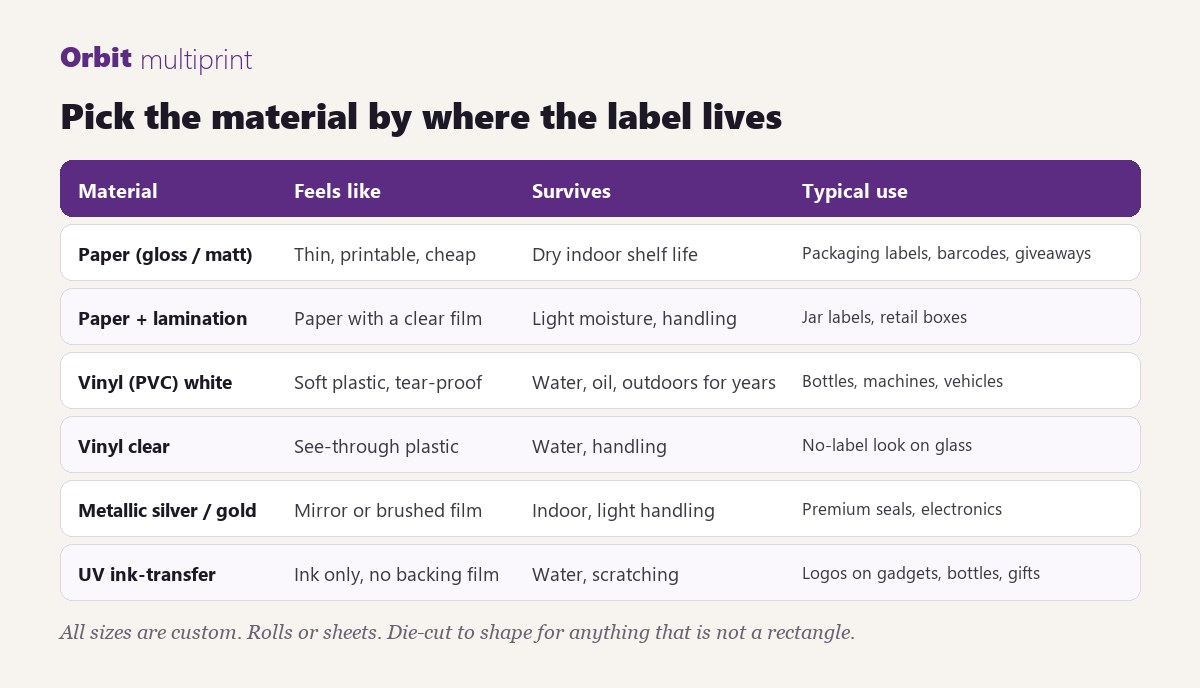
Paper, gloss or matt. Thin, inexpensive, prints beautifully. It is the right choice for anything that stays dry and indoors: carton labels, barcodes, packaging seals, giveaways. It tears, and water stains it.
Laminated paper. The same paper with a clear film on top. It handles light moisture and fingerprints, so it suits jar labels, retail boxes and anything that is picked up often. It is still paper underneath; long soaking will lift it.
White vinyl (PVC). A soft plastic face that does not tear and does not mind water or oil. With a laminate it lasts years outdoors. Bottles, machines, vehicles, outdoor equipment, anything washed or weathered. See PVC sticker labels in any size.
Clear vinyl. Transparent plastic for the "no-label" look on glass and clear bottles. Print white ink behind colours or the artwork will look faint.
Metallic silver and gold. Mirror or brushed metal films. Premium seals, electronics labels, award stickers. Indoors they look expensive; in direct sun the print fades. See silver metallic stickers.
UV ink-transfer. Not a sticker in the usual sense: only the ink transfers to the surface, with no backing film. Logos on gadgets, bottles and gifts look printed-on rather than stuck-on. See UV ink-transfer stickers.
How long each one lasts
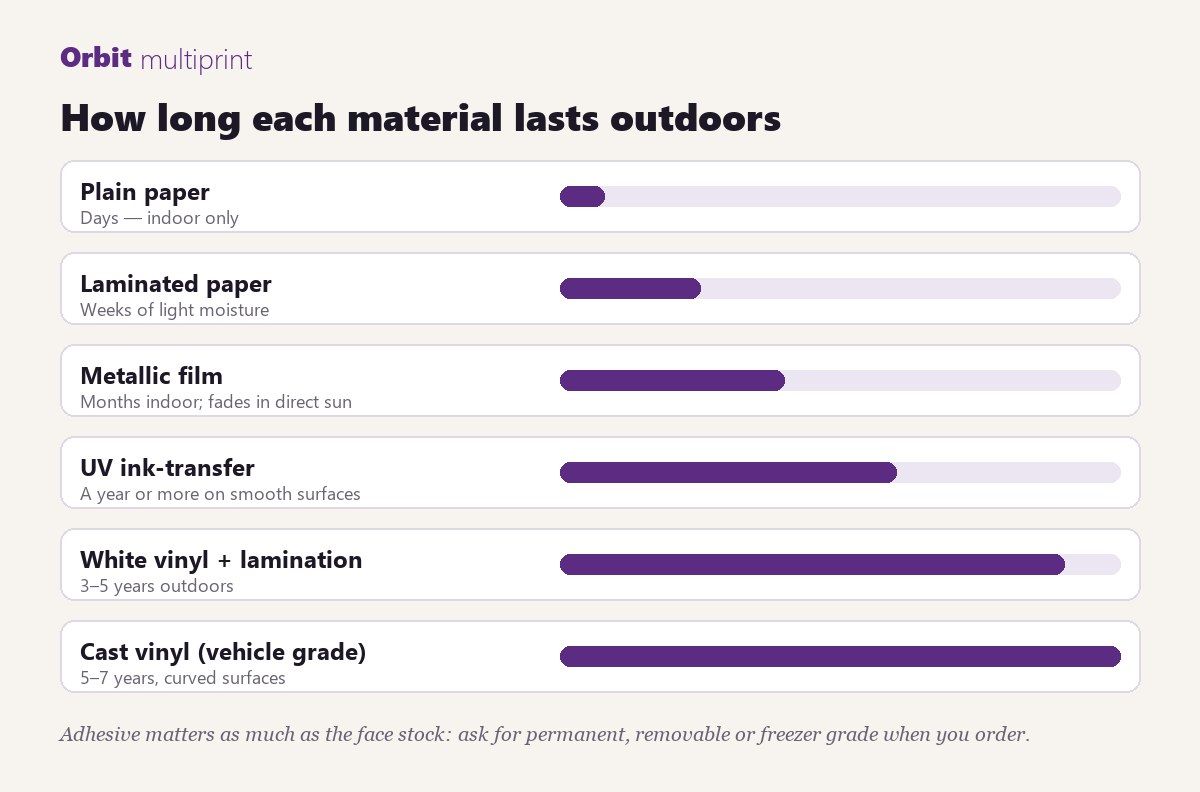
Indoors, every material above will last the life of the product it is on. Outdoors the gap is huge: paper survives days, laminated vinyl survives years. If a label sees sun, rain or washing, start from vinyl.
Adhesive matters as much as the face
The same vinyl can come with a permanent adhesive that will not come off a bottle, a removable adhesive that peels clean from a laptop, or a freezer-grade adhesive that holds at minus 18 degrees. Tell us where the sticker will go and what it will go through, and we choose the adhesive with the material. Three questions settle it:
1. Will it ever be removed? 2. Will it get wet, oily or cold? 3. Is the surface smooth, textured or curved?
Curved surfaces and textured plastics need a softer, more conformable film; ask for cast vinyl if the sticker wraps around anything.
Shape, size and format
Every sticker is cut to your size; there is no standard list. Rectangles and circles are cut on the sheet. Any other outline is die-cut, which needs a cut line in the artwork or a shape we draw for you.
- Sheets: for hand application, small quantities and mixed designs.
- Rolls: for dispensers and labelling machines; specify the roll direction.
- Kiss-cut: stickers cut through the face but not the backing, so a sheet of logos peels one at a time.
Artwork notes
Set the file up with 2 mm bleed around the cut shape and keep text 2 mm inside it. Use CMYK; for clear and metallic stocks include a white layer so colours stay solid. Small text under 5 pt disappears on textured films.
See the full sticker and label range, or send a photo of the product the sticker will go on to WhatsApp +91 90165 28799 and we will suggest the material, the adhesive and the price for your quantity. Large-format outdoor stickers and posters are under sticker and poster printing.